
Key Takeaways
- Autism Insomnia & Sleep Regression Autism: Sleep challenges affect up to 80% of autistic children. Autism insomnia is chronic, caused by melatonin irregularities, anxiety, and sensory sensitivities. Sleep regression autism is temporary, triggered by stress, illness, or routine changes.
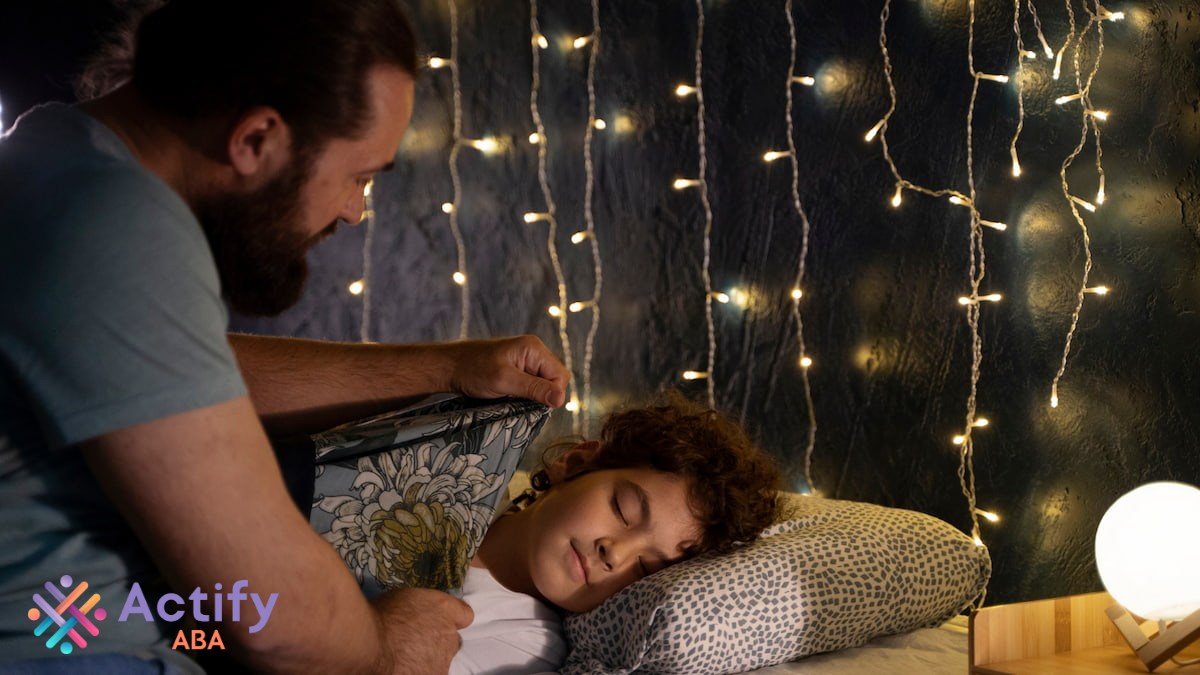
- Calming Bedtime Routines Autism: Consistent, soothing routines, bath, story, quiet time, reduce anxiety and night waking. Visual schedules, gradual transitions, and sensory-friendly environments address sensory sleep issues and promote independence.
- ABA Therapy for Better Sleep: ABA uses positive reinforcement, self-soothing skills, and behavioral analysis (ABC) to improve autism insomnia, sleep regression autism, and sensory sleep issues, creating structured calming bedtime routines autism for longer, restorative sleep.
Why Children with Autism Struggle With Sleep
Sleep difficulties affect up to 80% of children with autism, according to the National Health Institute.
Autism insomnia, sleep regression autism, and sensory sleep issues can lead to frequent night waking, difficulty falling asleep, and irregular sleep patterns. These challenges often worsen daytime irritability, hyperactivity, and focus, creating a cycle that reinforces poor sleep. This guide explains why sleep is disrupted in autistic children and how ABA therapy can provide effective solutions.
Sleep problems in autistic children arise from a combination of biological, sensory, and behavioral factors:
Biological Factors
- Melatonin Irregularities: Many children with autism have flat melatonin curves, producing insufficient sleep hormone at night, which reduces sleepiness.
- Circadian Rhythm Issues: Mutations in “clock genes” can disrupt the internal body clock, causing delayed sleep phases.
- REM Sleep Deficit: Less time in REM sleep can impair memory consolidation and reduce sleep quality.
Sensory and Neurological Influences
- Sensory Sensitivity: Heightened responsiveness to lights, sounds, textures, or bedding can make relaxation difficult.
- Hyperarousal: Neurological hyperactivity keeps the brain alert, delaying sleep onset.
- Parasomnias: Autistic children are at increased risk of night terrors, sleepwalking, or sleep paralysis.
Behavioral and Environmental Factors
- Rigid Routines: Any disruption to predictability can delay sleep onset.
- Bedtime Transitions: Difficulty moving from awake to asleep often requires comfort objects or parental presence.
- Screen Time: Blue light from devices suppresses melatonin production, worsening sensory sleep issues.
Co-Occurring Conditions
- Anxiety & ADHD: Both commonly interfere with initiating and maintaining sleep.
- Gastrointestinal (GI) Issues: Pain, reflux, or constipation can disrupt sleep patterns.
Common Sleep Problems in Autistic Children
Children with autism may experience difficulty:
- falling asleep,
- frequent night waking,
- early morning waking,
- parasomnias such as nightmares or night terrors.
Irregular sleep patterns and disrupted circadian rhythms are also common. These issues often lead to daytime irritability, hyperactivity, and difficulty focusing, affecting overall quality of life.
Autism Insomnia vs. Sleep Regression
Sleep problems in autism can be chronic (insomnia) or temporary (regression), and it’s important to distinguish between the two. Autism insomnia stems from neurological and biological differences such as melatonin irregularities, sensory sensitivities, anxiety, and unique brain wiring. It is persistent and ongoing.
Sleep regression in autism occurs when a child experiences a temporary disruption in previously established sleep patterns, often due to developmental milestones, stress, illness, or routine changes. In autistic children, regressions are often more severe and prolonged, making them feel like deep insomnia.
While insomnia requires strategies targeting underlying neurological and sensory issues, regression is addressed by reinforcing routines, addressing triggers, and supporting the child with sensory tools.
| Feature | Autism Insomnia | Sleep Regression in Autism |
| Cause | Neurological/biological differences: melatonin irregularities, sensory sensitivities, anxiety | Developmental milestones, stress, illness, or routine changes |
| Duration | Chronic, ongoing | Temporary (weeks to months), may be amplified in autism |
| Symptoms | Difficulty initiating/maintaining sleep, bedtime resistance, frequent night waking | Sudden increase in night wakings, bedtime refusal, longer time to fall asleep |
| Intervention | Focus on underlying neurological and sensory support | Address triggers, reinforce routines, use sensory supports |
| Impact in Autism | Persistent sleep deprivation exacerbates autism symptoms | Regression often feels like severe insomnia due to sensory and emotional challenges |
How ABA Therapy Helps Children Sleep
Applied Behavior Analysis (ABA) provides structured, evidence-based solutions for autism insomnia, sleep regression autism, and sensory sleep issues. ABA helps children:
- Develop consistent sleep habits
- Reduce bedtime resistance and night waking
- Build independence through self-soothing skills
- Address sensory and anxiety-related triggers
ABA is often combined with Cognitive Behavioral Therapy for Childhood Insomnia (CBT-CI) for a comprehensive approach.
Start your child’s sleep journey with Actify ABA today.
Key ABA Strategies for Sleep
- Consistent Routines: Creating a predictable sequence of calming activities, such as a bath, story, and quiet time, signals to the brain that it’s time to sleep. Visual schedules can help children understand what to expect, reducing anxiety around bedtime.
- Positive Reinforcement: Rewarding desired behaviors, such as staying in bed or falling asleep independently, helps children associate bedtime with positive outcomes, encouraging repeat behaviors.
- Environmental Adjustments: Optimizing the sleep environment is crucial. A cool, dark, quiet, and sensory-friendly bedroom can improve rest. Additional calming inputs like gentle massage, white noise, or soft music can support relaxation.
- Behavioral Analysis (ABC: Antecedent, Behavior, Consequence): ABA identifies triggers for sleep-disrupting behaviors. By examining what happens before (antecedent) and after (consequence) behaviors like getting out of bed, therapists can adjust routines to change sleep patterns.
- Teaching Self-Soothing Skills: Children learn strategies to calm themselves during night waking, reducing reliance on parental intervention and fostering independence.
- Gradual Changes: Adjustments to bedtime or routines are made slowly, sometimes using techniques like graduated extinction (controlled check-ins) to manage crying, always under professional supervision.
How ABA Addresses Specific Sleep Issues
- Difficulty Falling Asleep/Insomnia: Calming routines and reduced bedtime anxiety help children fall asleep more easily.
- Sleep Regression: ABA reinforces previously learned good habits while addressing new triggers that may cause regression.
- Night Waking and Bedtime Resistance: Children learn to fall back asleep independently, while positive reinforcement encourages staying in bed.
Important Considerations for ABA Sleep Interventions
- Individualized Plans: Each child’s sleep plan is tailored to their sensory needs, anxiety levels, and unique challenges.
- Professional Guidance: A Board Certified Behavior Analyst (BCBA) designs and oversees the plan, often collaborating closely with parents.
- Patience and Consistency: Behavioral changes require time and consistent implementation, demanding family commitment and perseverance.
ABA therapy provides a structured, evidence-based approach to help children with autism establish healthy sleep patterns, reduce nighttime disruptions, and develop independence, improving both nighttime rest and daytime functioning.
Example: Calming ABA-Based Bedtime Routine (30–60 Minutes)
Wind-Down (30–45 minutes before bed):
- Turn off screens (TV, tablets).
- Warm bath or shower to relax.
- Put on pajamas.
- Dim lights; use a nightlight if needed.
Calming Activities (15 minutes before bed):
- Brush teeth, use the toilet (visual timers help).
- Quiet reading or soft music/white noise.
- Gentle massage or deep pressure (weighted blanket if used).
Bedtime:
- Tuck in with a final hug/kiss.
- Lights out, say “Goodnight”.
- If waking, use graduated extinction or a “sleep pass” for a brief check-in.
ABA Principles for Calming Bedtime Routines Autism

- Consistency: Same order, same time daily.
- Predictability: Visual schedules reduce anxiety.
- Positive Reinforcement: Praise, stickers, or small rewards for compliance.
- Behavioral Momentum: Start easy (putting on pajamas) and progress to harder tasks (teeth brushing).
- Stimulus Fading: Transition from stimulating activities to soothing ones (screens off, lights dim).
Tips for Success
- Visual Schedules: Use pictures for each step so the child can track progress.
- Timers: Make time concrete (e.g., 5 minutes for brushing teeth).
- Reward Charts: Sticker charts motivate completion of steps.
- Patience: Habits may take around 21 days to establish; celebrate small wins.
ABA therapy provides a structured, evidence-based approach to improving autism insomnia, sleep regression autism, and sensory sleep issues. By establishing calming bedtime routines autism, teaching self-soothing skills, and reinforcing positive behaviors, children can fall asleep more easily, stay asleep longer, and gain independence. This not only improves nighttime rest but also enhances daytime functioning and overall quality of life.
Start your child’s journey to better sleep today with Actify ABA tailored to their unique needs.
FAQs
1. How common are sleep problems in children with autism?
Up to 80% of children with autism experience autism insomnia, sleep regression autism, or sensory sleep issues, including difficulty falling asleep, frequent night waking, and irregular sleep patterns. These challenges often worsen daytime irritability, hyperactivity, and difficulty focusing.
2. Why do children with autism struggle with sleep?
Several biological, sensory, and behavioral factors contribute to autism insomnia and sleep regression autism: (a) Melatonin irregularities: flat melatonin curves reduce sleep hormone production at night. (b) Circadian rhythm issues: mutations in “clock genes” can delay sleep phases. (c) REM sleep deficit: less REM reduces overall sleep quality. (d) Sensory sensitivities: heightened response to lights, sounds, or textures can prevent relaxation. (e) Hyperarousal: neurological hyperactivity keeps the brain alert at bedtime. (f) Parasomnias: increased risk of night terrors, sleepwalking, or sleep paralysis.
3. How do routines and environment affect sleep in autistic children?
Rigid routines and bedtime transitions impact sleep quality. Children with autism may struggle with disrupted routines, requiring comfort objects or parental presence. Excessive screen time can suppress melatonin, worsening sensory sleep issues.
4. Do co-occurring conditions affect sleep?
Yes, anxiety, ADHD, and gastrointestinal (GI) issues can exacerbate autism insomnia and sleep regression autism by interfering with sleep onset and maintenance.
5. What is the difference between autism insomnia and sleep regression autism?
Autism insomnia is chronic and stems from neurological and biological differences like melatonin irregularities, sensory sensitivities, and anxiety. Sleep regression autism is temporary, caused by developmental milestones, stress, illness, or routine changes. In autistic children, regressions can feel severe and prolonged due to sensory sleep issues.
6. What are the symptoms of autism insomnia?
Symptoms include difficulty initiating or maintaining sleep, bedtime resistance, frequent night waking, early waking, and irregular sleep patterns, often leading to daytime irritability, hyperactivity, and inattention.
7. What are the symptoms of sleep regression autism?
Children may suddenly have more night wakings, longer time to fall asleep, bedtime refusal, meltdowns at night, and increased daytime sleepiness, amplified by sensory sensitivities.
8. How does ABA therapy help improve sleep in children with autism?
ABA therapy addresses autism insomnia, sleep regression autism, and sensory sleep issues by establishing calming bedtime routines autism, using positive reinforcement, and teaching self-soothing skills. ABA promotes independent, healthy sleep patterns and reduces anxiety and bedtime resistance.
9. What are the key ABA strategies for sleep?
Strategies include: (a) Consistent routines: predictable sequences like bath, story, and quiet time with visual schedules. (b) Positive reinforcement: rewarding staying in bed or falling asleep independently. (c) Environmental adjustments: creating a sensory-friendly, cool, quiet, and dark bedroom. (d) Behavioral analysis (ABC): identifying antecedents and consequences of sleep-disrupting behaviors. (e) Self-soothing skills: teaching children to calm themselves during night waking. (f) Gradual changes: slowly adjusting routines and bedtimes using techniques like graduated extinction.
10. How does ABA address specific sleep challenges?
ABA helps with insomnia and difficulty falling asleep through calming routines and anxiety reduction. For sleep regression autism, ABA reinforces previously learned habits and addresses new triggers. Night waking and bedtime resistance are managed by teaching self-soothing and using positive reinforcement.
11. What does a sample ABA-based bedtime routine look like?
Wind-down (30–45 minutes before bed): turn off screens, warm bath/shower, pajamas, dim lights. Calming activities (15 minutes before bed): brush teeth, use toilet, quiet reading or soft music, gentle massage or deep pressure. Bedtime: tuck in, lights out, brief check-in if waking using graduated extinction or “sleep pass.”
12. What ABA principles support calming bedtime routines autism?
Principles include consistency (same order/time), predictability (visual schedules), positive reinforcement (praise or small rewards), behavioral momentum (start with easy tasks), and stimulus fading (transition from stimulating to soothing activities).
13. What tips help make ABA bedtime routines successful?
Use visual schedules to track progress, timers to make tasks concrete, reward charts to motivate completion, and patience—habits may take around 21 days to establish.
14. Why is ABA therapy effective for autism insomnia and sleep regression autism?
ABA modifies behaviors and creates a supportive environment, addressing sensory sleep issues and reinforcing calming bedtime routines autism, enabling children to fall asleep more easily, stay asleep longer, and gain independence, improving both nighttime rest and daytime functioning.
