

Key Points:
- Early ABA works best, but benefits all ages once developmental concerns appear.
- Our intake process guides families from consultation to personalized therapy.
- The first session builds trust, focusing on comfort and rapport, not tasks.

Starting Applied Behavior Analysis (ABA) therapy can feel overwhelming, but what if the process were simpler than you think?
With Actify ABA, Maryland, it becomes clear, structured, and empowering. If you’re wondering how to start ABA therapy, this guide walks you through the ABA intake process, explains ABA therapy steps, and shows exactly what to expect during autism therapy enrollment.
Signs It May Be Time to Start ABA Therapy
You may consider beginning the autism therapy enrollment process if your child shows:
- Delays in speech or language development
- Limited eye contact
- Social interaction challenges
- Repetitive behaviors or restricted interests
If you have concerns, speaking with a pediatrician is often the first step in starting ABA in Maryland.
Why Early Intervention Matters
ABA therapy is most effective when started early, ideally between 18 months and 5 years old, when brain development is most rapid. Early intervention, especially before the ages of 3 and 4, can significantly improve communication, behavior, and learning outcomes.
That said, if you’re exploring how to start ABA therapy, it’s important to know:
- ABA therapy can begin at any age once developmental concerns are noticed
- Some services are available for toddlers under 5, even without a formal diagnosis
What to Expect When You’re Starting ABA Therapy
Understanding the fundamentals of ABA therapy steps can help you feel more prepared:
- Comprehensive Assessment: Conducted by a BCBA through observation, interviews, and standardized tools
- Flexible Access: A diagnosis is often required for insurance, but some early programs may not require one immediately

Considerations Before Getting Started
As you begin getting started with ABA Maryland, keep these in mind:
- Credentials Matter: Ensure your provider employs Board Certified Behavior Analysts (BCBAs)
- Ask about Waitlists: Speak with a representative about current wait times, and be sure to provide your ZIP code so they can give you the most accurate timeline based on your location.
- Parental Involvement Is Key: Caregiver training is essential for long-term success
What Happens in the First ABA Therapy Session?
The first Applied Behavior Analysis (ABA) session is designed to be low-pressure, positive, and relationship-focused. Rather than jumping straight into structured learning, the therapist prioritizes pairing (rapport building), initial assessment, and creating a safe, engaging environment where your child feels comfortable.
How to Prepare for Your Child’s First ABA Therapy Session
Preparing for your child’s first session is an important step in the ABA intake process.
Remember, the first session in the ABA therapy steps is focused on building rapport and assessment, not performance.
Preparing Your Child
Helping your child feel excited and secure can make a big difference.
- Use Simple, Positive Language: Describe the therapist as a “new friend” who is coming to play games and have fun.
- Use Visual Supports: Add the session to your child’s daily routine using a visual schedule so they know what to expect.
- Have Comfort Items Ready: Keep your child’s favorite toys, snacks, or soothing items nearby to help them feel at ease.
- Keep Expectations Low: Avoid placing pressure on behavior or performance; this stage of autism therapy enrollment is all about comfort and connection.
Preparing Yourself as a Parent or Caregiver
Your role is just as important when getting started with ABA Maryland, and a little preparation can go a long way.
- Set Up a Calm Space: Choose a quiet, distraction-free area in your home (like a small table or play space) for the session.
- Be Present and Observant: Stay for at least part of the session to see how the therapist engages with your child.
- Share Key Information: Communicate your child’s interests, triggers, routines, and any recent changes in behavior with the therapy team.
- Have Documents Ready: Keep any evaluations, reports, or notes handy to support the ABA intake process.

What Happens in the First ABA Therapy Session: Strategies & Real Examples
The main goal? Help your child associate the therapist with fun, trust, and positive experiences, an essential foundation in the ABA intake process and early ABA therapy steps.
1. Pairing and Rapport Building
Pairing is one of the most important first steps when learning how to start ABA therapy. The therapist becomes a “giver of good things” by offering preferred items and activities without placing demands.
Examples:
- The therapist sits on the floor and plays with your child’s favorite toys (like trains or sensory items) without asking questions or giving instructions, just engaging and praising.
- The therapist blows bubbles, and when your child laughs or shows interest, they immediately blow more to reinforce the interaction.
This approach builds trust and sets the tone for successful autism therapy enrollment.
2. Natural Environment Teaching (NET)
Natural Environment Teaching (NET) uses play and everyday interactions as learning opportunities, making therapy feel natural and child-led.
Examples:
- While playing with toy cars, the therapist introduces simple concepts like colors (“You have the red car”) or positions (“The car is under the bridge”).
- During pretend play, the therapist follows your child’s lead and encourages communication within the activity.
NET is commonly introduced early in the ABA therapy steps to keep learning engaging and meaningful.
3. Positive Reinforcement (High-Frequency)
In the first session, positive reinforcement is used frequently, even for small efforts, to encourage engagement and build motivation.
Examples:
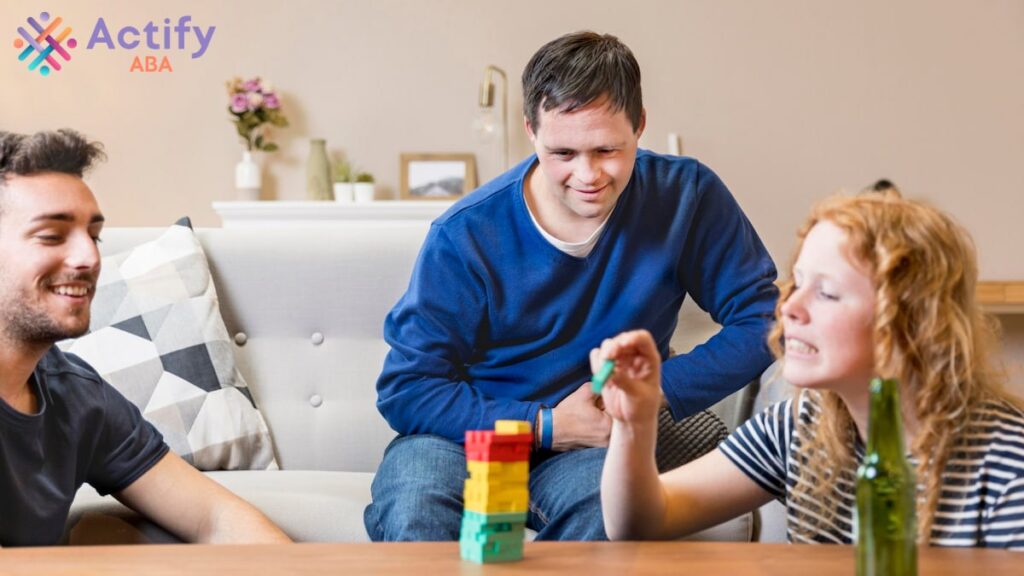
- After placing one block on a tower, the therapist says, “Great stacking!” and offers a high-five or small reward.
- Completing a short activity may earn brief access to a favorite item, like a tablet or toy.
This strategy helps children quickly learn that participation leads to positive outcomes.
4. Functional Communication Training (FCT)
Functional Communication Training (FCT) teaches children how to express their needs effectively, reducing frustration and challenging behaviors.
Examples:
- If your child reaches for a toy, the therapist prompts them to say “toy” or use a picture card, then immediately gives it to them.
- Teaching a simple sign like “more” to request additional snacks or playtime.
FCT is a core part of getting started with ABA Maryland, especially for children with communication delays.
5. Preference Assessments
To make therapy effective, the therapist identifies what motivates your child through preference assessments.
Examples:
- Presenting multiple items (like a puzzle, ball, and toy car) and observing which your child chooses first.
- Rotating activities to see which ones hold attention the longest.
These insights are used throughout the ABA intake process to tailor reinforcement and engagement strategies.
6. ABC Data Collection (Antecedent-Behavior-Consequence)
Therapists begin collecting ABC data to understand behavior patterns and triggers.
- Antecedent (A): What happens before the behavior
- Behavior (B): The child’s response
- Consequence (C): What happens after
Example:
- A: Therapist removes bubbles
- B: Child screams
- C: Therapist returns bubbles
This helps identify why behaviors occur (e.g., to gain access to items), informing future ABA therapy steps.
7. Gentle Modeling
Modeling introduces simple skills by showing, not forcing, what to do, encouraging imitation in a supportive way.
Examples:
- The therapist says, “Do this,” while tapping their head, then praises any attempt to copy.
- Demonstrating how to stack blocks or roll a ball back and forth.
This builds early learning skills while keeping the session fun and pressure-free.

Tips for a Successful First ABA Session
To make your child’s first ABA session positive and effective, consider these helpful strategies:
- Prepare Your Child Emotionally: Use cheerful, simple language to describe the therapist as a “new friend” who will come to play and have fun.
- Create a Comfortable Space: Set up a calm, organized area with favorite toys, sensory items, or snacks to make your child feel secure.
- Keep the Session Low-Stress: Don’t worry if your child is hesitant or shy, this session is about building trust, not testing skills.
- Engage as a Parent: Be ready to share information about your child’s interests, motivators, and possible triggers to help the therapist tailor activities.
Why the First Session Matters
The first session lays the groundwork for everything that follows in the ABA intake process.
By focusing on trust, motivation, and comfort, therapists create an environment where meaningful learning can happen over time.
If you’re exploring how to start ABA therapy or moving through autism therapy enrollment, understanding this stage can help you feel confident and prepared for what’s ahead.
Understanding how to start ABA therapy doesn’t have to be complicated. By following the ABA therapy steps, navigating the ABA intake process, and knowing what to expect during autism therapy enrollment, you can confidently begin your journey.
Whether you’re just exploring options or actively getting started, taking that first step today can make a meaningful difference in your child’s development and future success. Explore your ABA options with us.

FAQs
1. At what age should I start ABA therapy for my child?
ABA therapy is most effective when started early, ideally between 18 months and 5 years old, but children of all ages can benefit once developmental concerns or autism signs are noticed.
2. Do I need a formal autism diagnosis to start ABA therapy?
While a formal diagnosis is usually required for insurance coverage, some programs may accept toddlers under 5 even without a confirmed diagnosis.
3. What happens during the first ABA therapy session?
The first session focuses on building rapport, comfort, and trust. Therapists engage in play, observe your child, and collect initial data rather than enforcing high-demand tasks.
4. What should I do to prepare for my child’s first session?
Prepare a calm space, have favorite toys or snacks available, use positive language to describe the therapist as a “new friend,” and be ready to share information about your child’s interests, motivators, and triggers.
5. How do I know if ABA therapy is right for my child?
If your child shows delays in speech, social challenges, limited eye contact, or repetitive behaviors, it’s worth consulting a pediatrician and exploring ABA therapy options. Feel free to give us a call to connect with the Executive Clinical Director, who will gladly walk you through what services may look like for your child: 410-929-0988.
