

Key Points:
- ABA therapy helps children with autism build social problem-solving skills that improve daily interactions and independence.
- Structured ABA strategies like role-playing, modeling, and reinforcement teach children how to navigate real-life social challenges.
- With consistent ABA support, children can strengthen perspective-taking, communication, and cooperation across settings.
For many children with autism, social situations can be confusing and overwhelming. They may struggle to read facial expressions, understand others’ intentions, or figure out how to respond appropriately in different settings. These challenges can make forming friendships and resolving conflicts difficult.
Social problem-solving skills are essential for everyday success. They help children manage frustration, communicate effectively, and adapt to social expectations. Applied Behavior Analysis (ABA) therapy provides a structured and evidence-based way to teach these skills step-by-step.
ABA therapists use individualized strategies to help children with autism learn how to interpret social cues, make better choices, and practice positive social interactions. This approach helps transform moments of frustration into opportunities for learning and growth.
How ABA Therapy Builds Social Problem-Solving Skills
Social problem-solving is not learned overnight. It requires repetition, guidance, and reinforcement. ABA therapy uses these elements to teach children how to analyze situations, predict outcomes, and choose appropriate responses.
Here are some common ABA methods that strengthen problem-solving skills in autism:
- Task Analysis: Therapists break down complex social situations into smaller, teachable steps. For example, greeting a peer can be divided into eye contact, saying hello, and responding appropriately.
- Modeling and Role-Play: Children watch others model positive social behavior, then practice through guided role-play to reinforce understanding.
- Prompting and Fading: Therapists provide cues or reminders during practice, gradually reducing support as the child gains confidence.
- Reinforcement: Positive behaviors are rewarded immediately to motivate learning and encourage consistency.
These ABA-based strategies ensure children experience success with social problem-solving in autism by building both confidence and competence through repetition and positive reinforcement.

Teaching Social Thinking Through ABA
Social thinking involves understanding how one’s behavior affects others. For children with autism, this concept can be abstract and difficult to grasp. ABA therapy helps by teaching concrete skills related to social thinking in a structured and measurable way.
Therapists guide children to recognize how others might feel or think in specific scenarios. For example, if a child grabs a toy from another child, the therapist helps them identify the consequence, “Your friend looks sad because he wanted to play too.”
This connection between action and reaction builds perspective-taking and empathy, two core parts of social learning in autism. Over time, children start to generalize these lessons beyond therapy sessions, applying them in school, at home, and in the community.
Building Communication Skills for Better Problem Solving
Effective communication is the foundation of successful social interactions. Many children with autism face challenges expressing themselves or understanding others. ABA therapy incorporates communication goals into social problem-solving lessons.
Therapists often use tools such as:
- Visual supports like pictures or cue cards to represent emotions, responses, or conversation steps.
- Scripts and social stories to rehearse conversations or common social exchanges.
- Functional communication training (FCT) to teach children appropriate ways to express needs or discomfort without resorting to frustration or aggression.
These methods give children the language and confidence to manage social situations, express their thoughts, and ask for help when needed. Improved communication leads to smoother interactions and fewer misunderstandings.
Encouraging Perspective-Taking in Autism
Perspective-taking, or understanding others’ thoughts and feelings, is another area where ABA therapy offers structured teaching. Many children with autism have difficulty seeing a situation from another person’s viewpoint.
ABA therapists use exercises that teach children to interpret emotions and predict how someone might react. For example, they might look at photos of facial expressions or watch short video clips and discuss what the people in them might be thinking or feeling.
Through consistent ABA social skills training, children begin to grasp how their behavior influences others. They learn that cooperation, patience, and empathy can lead to more positive outcomes in social interaction.
Strengthening Cooperative Play Skills
Cooperative play helps children learn teamwork, turn-taking, and flexibility. For children with autism, playing with others can sometimes cause stress or confusion. ABA therapy focuses on teaching play as a social skill rather than just a leisure activity.
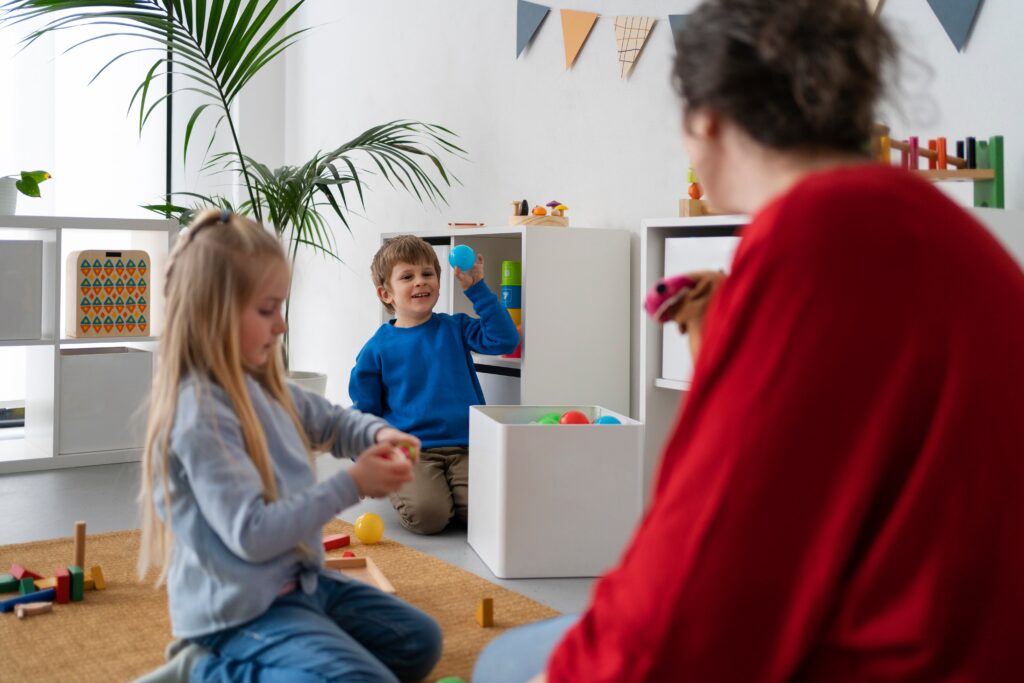
Therapists structure playtime to promote collaboration. They might guide children to share materials, take turns in a game, or plan an activity together. Reinforcement and modeling encourage children to repeat these behaviors naturally.
Practicing cooperative play in ABA therapy builds social confidence. Over time, children transfer these skills into group settings at school or during community activities, improving their ability to connect with peers.
Social Behavior and Problem Solving in Real-Life Settings
One of the most effective aspects of ABA therapy is its ability to generalize skills. Social behavior learned in therapy is practiced across real-life situations such as classrooms, playgrounds, or family gatherings.
Therapists collaborate with parents and teachers to ensure that learned behaviors are consistently reinforced outside of sessions. This coordination strengthens problem-solving abilities and helps children adapt to different environments.
Consistent generalization strategies improve social interaction outcomes and help children maintain progress across settings.
By promoting practice and reinforcement in multiple contexts, ABA ensures that children not only learn new skills but also apply them when it matters most.
Practical Tips for Parents Supporting Social Learning at Home
Parents play an important role in reinforcing ABA-based social learning at home. Here are a few strategies that complement therapy sessions:
- Model calm problem-solving: Show your child how to stay calm, think through options, and choose a response when facing a challenge.
- Use visual reminders: Post pictures or cue cards that illustrate expected social behaviors, like sharing or asking for help.
- Create play opportunities: Arrange structured playdates or small group activities where your child can practice turn-taking and cooperation.
- Celebrate small successes: Praise or reward even small social improvements to encourage consistent effort.
These everyday interactions help solidify what your child learns in ABA sessions and make social problem-solving part of daily life.
A New Way to Connect: The Power of ABA in Social Learning
Teaching social problem-solving skills through ABA therapy is more than helping children “fit in.” It empowers them to communicate their needs, understand others, and build lasting relationships. With structured support and practice, children gain the tools they need to handle challenges calmly and confidently.
Families who commit to this approach often see their children become more independent, resilient, and socially engaged. The process may take time, but every step forward represents meaningful progress.
If you’re ready to help your child strengthen social problem-solving skills, Actify ABA offers personalized ABA therapy in Maryland designed to support growth in communication, social behavior, and daily living.
Our experienced team at Actify ABA uses evidence-based strategies tailored to your child’s unique strengths and needs. Through consistent, compassionate care, we help children learn how to navigate friendships, express themselves, and adapt confidently in social situations.
Take the first step toward building your child’s social confidence today. Contact us to learn more about our ABA therapy services in Maryland and how we can help your child succeed.
