
Key Points:
• Parents can build early communication by creating structured opportunities, modeling language, and recognizing a child’s unique ways of expressing needs.
• Tools like augmentative communication systems, ABA strategies, and visual supports help children communicate more effectively.
• Consistency at home improves language development, communication skills, and confidence in nonverbal children.
Parents searching for help with communication in nonverbal autism often arrive overwhelmed, unsure where to start. The desire to hear a child express a need or emotion is powerful, and the silence around communication can feel isolating. Many parents wonder what is possible, what strategies truly work, and how to support meaningful communication every day.
The good news is that children communicate in many ways, and there are practical, research-supported approaches that parents can use to encourage connection at home. Whether your child uses gestures, sounds, AAC tools, or a mix of methods, the right strategies can make communication feel more natural and less stressful.
This guide offers clear, parent-friendly techniques grounded in ABA, speech-language principles, and real communication science. Each section focuses on helping families understand how communication develops, what supports improve it, and how to grow communication skills intentionally.
Understanding the Communication Profile in Nonverbal Autism
Nonverbal autism communication is shaped by a child’s strengths, challenges, sensory needs, and learning patterns. Many children communicate through behaviors long before they use words. Identifying these early communication cues is essential.
Some children express needs through gestures, while others show them through actions such as pulling a parent’s hand or moving toward preferred items. These signals may not look like traditional language, but they are foundational building blocks for nonverbal child communication.
Research from the CDC estimates that about 40 percent of autistic children are minimally verbal or nonverbal (Source: https://www.cdc.gov/ncbddd/autism/data.html). This highlights the importance of intentional early strategies to support language development in autism and communication growth at home.
Why Early Communication Matters
Communication helps children express needs, reduce frustration, and feel understood. It also allows families to build stronger relationships with their children. When a child feels successful in communication, confidence grows, leading to more attempts.
Communication skills for autism do not always follow a linear path. Some children may progress slowly with verbal behavior ABA strategies, while others build expressive communication more quickly with AAC supports.
Regardless of the method used, the goal is the same: help the child connect meaningfully with family and the world.
Nonverbal Autism Communication: A Parent’s First Approach
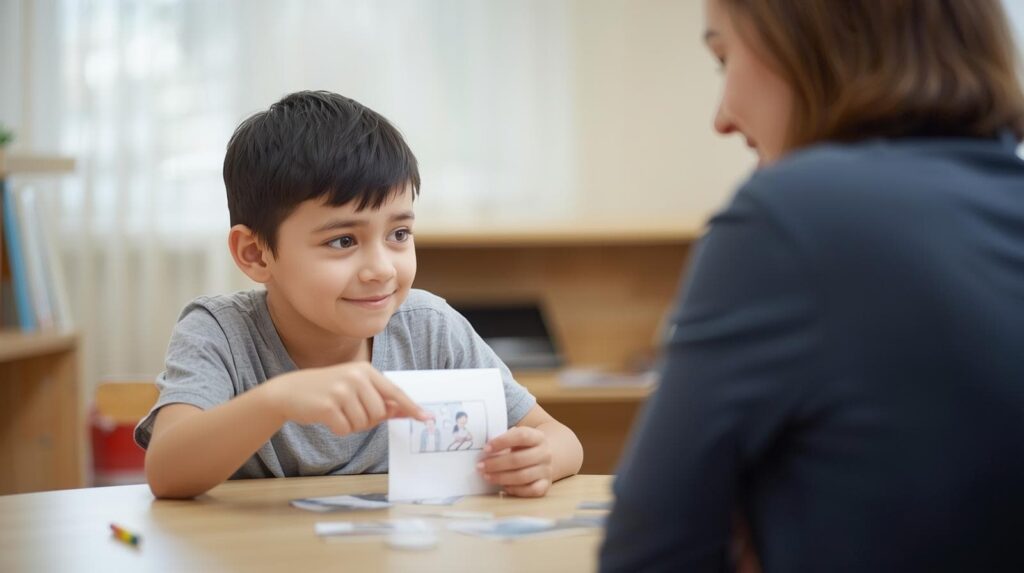
Every communication effort counts, even if it doesn’t involve spoken words. When addressing nonverbal autism communication, parents can start by noticing patterns, identifying what motivates their child, and creating simple opportunities for the child to express a need or choice.
Look for moments when the child becomes naturally engaged. If your child reaches for a snack or a toy, that is a perfect moment to pause and encourage a communication response. This is often the first step toward creating communication goals that ABA therapists also build into treatment plans.
Parents can help communication flourish by following the child’s lead and turning everyday routines into language-building opportunities.
Using Autism Communication Strategies at Home
Children benefit most when communication strategies feel natural. The right autism communication strategies blend into daily routines and do not overwhelm the child.
Here are ways to support communication throughout the day:
• Use simple and consistent language during activities.
• Give your child time to process words.
• Repeat meaningful phrases tied to actions such as “open,” “up,” or “go.”
• Model gestures like pointing or waving while speaking.
These strategies strengthen both receptive and expressive language, supporting overall language development for autism in everyday situations.
Encouraging Early Vocalizations and Sound Play
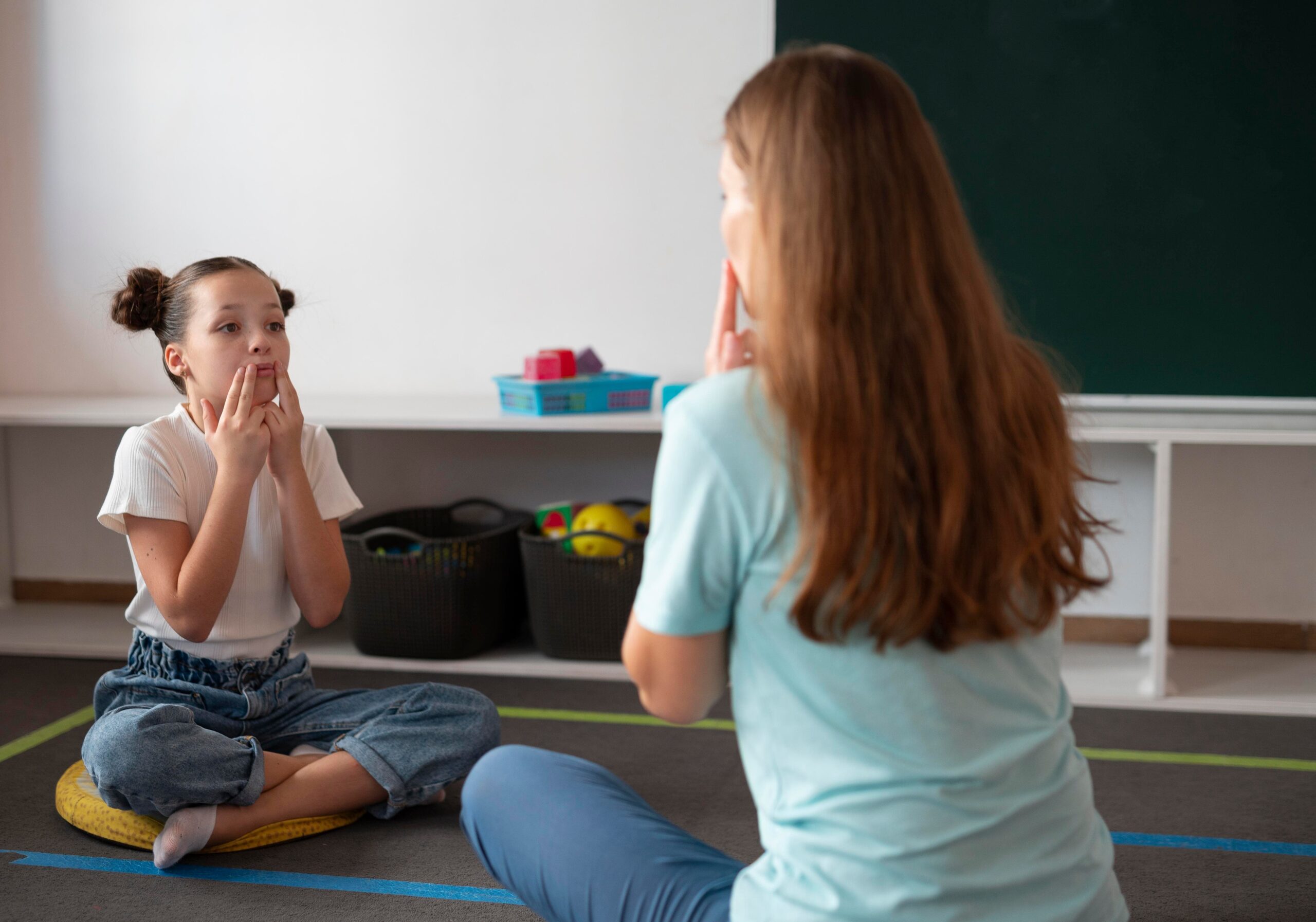
Not all communication begins with words. Many nonverbal children start with sounds, babbling, or vocalizing. Parents can nurture these early attempts by imitating the child’s sounds, reacting playfully, and turning vocal moments into small social exchanges.
These moments may seem small, but they are often the earliest signals that a child is ready to build communication skills.
Sound imitation and responsive play are also foundational elements in verbal behavior ABA programs, which focus on teaching children to use sounds and words functionally.
Introducing Augmentative Communication Autism Tools
Not all children will communicate with speech immediately. Some benefit from augmentative communication autism methods such as:
• Picture Exchange Communication System (PECS)
• Tablet-based communication apps
• Picture choice boards
• Simple sign language
• Core vocabulary boards
AAC does not prevent speech. Studies consistently show that AAC use supports overall communication, increases language attempts, and lowers frustration levels.
AAC tools are especially helpful for children who need structured communication pathways. These tools can become part of a transition plan for gradually increasing verbal or symbolic communication.
How ABA Speech Development Supports Communication Growth
ABA plays a significant role in teaching communication by breaking skills into small, achievable steps. ABA speech development techniques allow children to practice communication in a structured way that feels manageable.
Therapists often focus on skills such as:
• Requesting preferred items
• Labeling familiar objects
• Following simple one-step directions
• Building functional phrases
• Teaching the meaning of gestures or signs
These goals are built slowly and intentionally, helping families see progress without overwhelming the child.
ABA therapy also aligns closely with communication goals ABA teams set in collaboration with families and speech-language pathologists.
Creating Communication Opportunities in Daily Routines
Communication becomes natural when parents build it into everyday activities. The daily schedule that autism families follow can serve as the perfect framework.
During meals, parents can offer small portions and wait for the child to request more. During bath time, parents can pause before pouring water to encourage a gesture or sound. During play, parents can hold a favorite toy to encourage eye contact or a communication attempt.
Simple and consistent opportunities help parents avoid the frustration that comes from forced communication attempts. Instead, communication becomes predictable and meaningful.
Building Engagement and Connection
Meaningful communication begins with engagement. Children communicate more when they feel safe, connected, and understood. Parents can create a connection by joining in their child’s interests. This often means playing alongside them, matching their pace, and letting them take the lead.
Shared engagement builds the foundation for language development in autism, because children are more likely to use communication skills when they feel emotionally connected.
Teaching Functional Communication Behaviors
Some children communicate needs through behaviors such as crying, grabbing, or avoiding. These behaviors often occur when a child doesn’t yet have a way to express their wants.
Parents can support more functional communication by introducing a simple replacement behavior. For example:
• Teach pointing instead of grabbing
• Teach handing a picture card instead of crying
• Teach a gesture for “help” instead of becoming frustrated
These strategies align with verbal behavior ABA, which focuses on shaping functional responses before building full verbal communication.
Using Natural Environment Teaching to Support Communication
Natural Environment Teaching (NET) is an ABA approach that encourages learning in everyday settings. Instead of teaching skills at a table, parents and therapists use communication opportunities during play, routines, and naturally occurring activities.
NET helps children become more flexible communicators and strengthens their ability to use communication in real-life situations.
It is especially helpful for families working on communication skills and autism goals that involve generalizing language across settings.
Strengthening Joint Attention and Early Social Skills
Joint attention is the ability to share focus with another person. It plays a major role in communication development. Many nonverbal children need support in building this skill.
Joint attention strategies include:
• Pointing to objects while labeling them
• Holding items near the face so the child looks between object and parent
• Celebrating every moment of shared eye contact
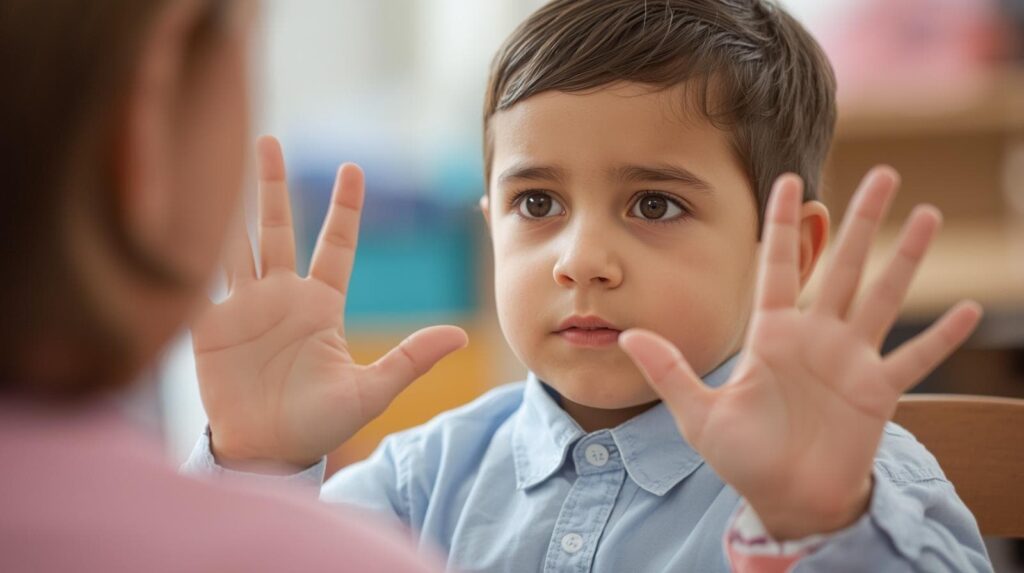
• Using gestures and animated expressions to maintain the child’s interest
Speech therapy autism sessions often target joint attention early because it sets the stage for language growth. Parents who practice these skills at home help expand communication naturally.
Supporting Communication During Moments of Frustration
Children who cannot express their needs may feel overwhelmed, especially when they cannot communicate clearly. Parents can reduce frustration by anticipating needs, offering choices, and presenting communication tools before the child becomes upset.
A communication tool offered early is more effective than one introduced during a moment of distress. This is a core principle of communication goals that ABA teams create for nonverbal learners.
Over time, these strategies help children view communication as a helpful way to navigate stressful moments.
Helping Children Generalize Communication Skills
Generalization means using a skill in different places, with different people, and at different times. Many children with nonverbal autism communication challenges need support generalizing new skills.
Parents can help by using communication strategies:
• At home
• In the community
• During therapy
• During play
• With different caregivers
The more varied the communication settings, the stronger the skill becomes.
Building Language With Play-Based Interaction
Play is one of the most powerful ways to encourage communication. Through play, children learn turn-taking, imitation, emotion sharing, and symbolic thinking. These are cornerstones of language development in autism.
Parents can support play-based communication by:
• Choosing open-ended toys
• Modeling simple play actions
• Narrating what the child is doing
• Pausing during play to encourage communication attempts
• Using predictable routines within play
Parents who use play strategically often see their child become more interactive and communicative.
A Meaningful Conclusion: Opening Communication Pathways
Encouraging communication in nonverbal autism is a journey shaped by patience, creativity, and consistency. Every gesture, sound, or picture exchanged is a meaningful step toward connection. Children learn communication through feeling understood, supported, and celebrated.
By blending structured ABA strategies with natural, relationship-based interaction, parents help create a communication environment that feels safe and inviting. Approaches such as NET, verbal behavior ABA, and AAC tools complement the nurturing atmosphere families build at home.
As communication strengthens, children gain confidence, reduce frustration, and become more active participants in daily life. ABA therapy can be a valuable partner in this journey, providing structured guidance to help families turn communication goals into steady, meaningful progress.
If you’re ready to help your child build communication skills through structured strategies and supportive guidance, Actify ABA offers ABA therapy in Maryland designed to help families strengthen communication routines at home. Through personalized ABA services Maryland families can rely on, your child can learn expressive language skills at a pace that feels comfortable and achievable.
Actify ABA works with families to understand communication goals, build parent strategies, and create a pathway to long-term communication growth. Contact us for more information.
