

Quick Summary:
- Actify ABA’s in-home ABA therapy teaches skills your child can also use in various settings.
- Generalization is the goal, not just growth during a session.

Does your child do great during therapy sessions at home, but struggle the moment you step into a grocery store or a playground? You are not alone in asking this. Many parents watch their child master a skill in one setting, then wonder why it disappears somewhere else. It can be confusing and frustrating.
In our experience, learning a skill and using that skill in real life are two different things. This is where ABA generalization skills come into play, and it is exactly why community-based practice matters so much for kids on the autism spectrum.
What Does Generalization Mean?
Generalization is the ability to take a skill learned in one context and apply it in another. If your child learns to ask for help at home, generalization means they can also ask for help at school, at a friend’s house, or in the middle of a busy store.
Without generalization, skills stay stuck. Your child might raise their hand to ask a question during a session but freeze up when a teacher asks the class a similar question. That gap between “can do it here” and “can do it everywhere” is what we focus on closing.
Why Community-Based ABA Therapy Matters in Ellicott City
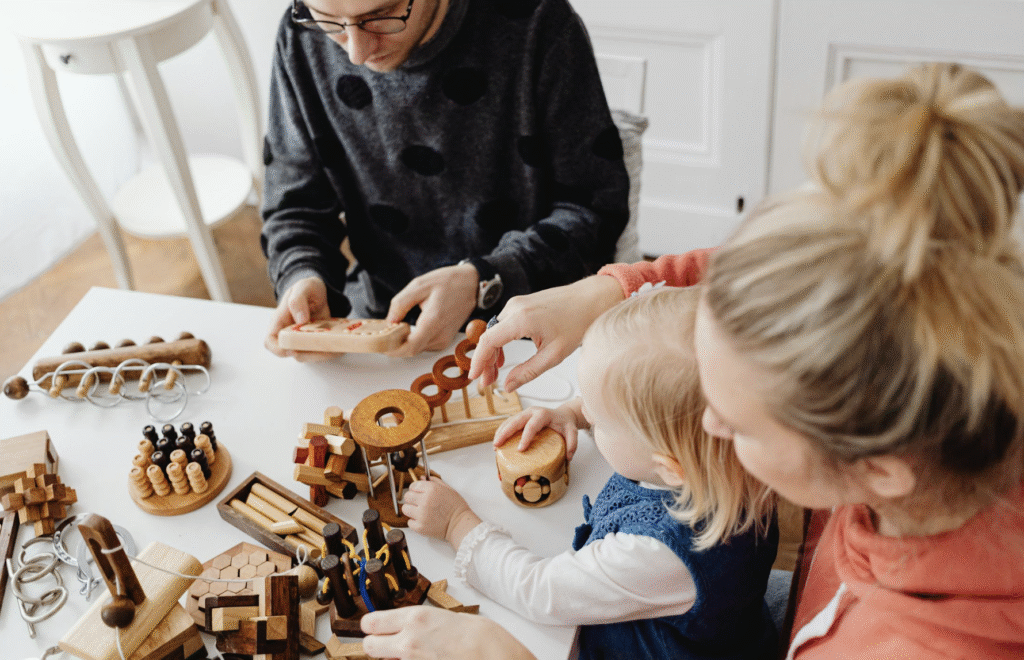
Ellicott City families deal with the same daily routines as everyone else. Grocery runs. Doctor visits. Birthday parties. Walks around the neighborhood. These moments are full of small social and communication demands that a child with autism may not have practiced anywhere but home.
That is why community-based ABA therapy in Ellicott City is such a valuable piece of treatment. It takes the skills your child is building and moves them into the exact settings where your family lives their life. At Actify ABA, we see this as a natural extension of the work already happening in your home, not a separate add-on.
In-community autism therapy in Ellicott City gives your child a chance to practice ordering food, waiting in line, greeting a neighbor, or handling a loud environment, with support right there beside them. These are not abstract goals. They are the exact situations your family faces every week.
How In-Home ABA Training Carries Over Into Other Settings
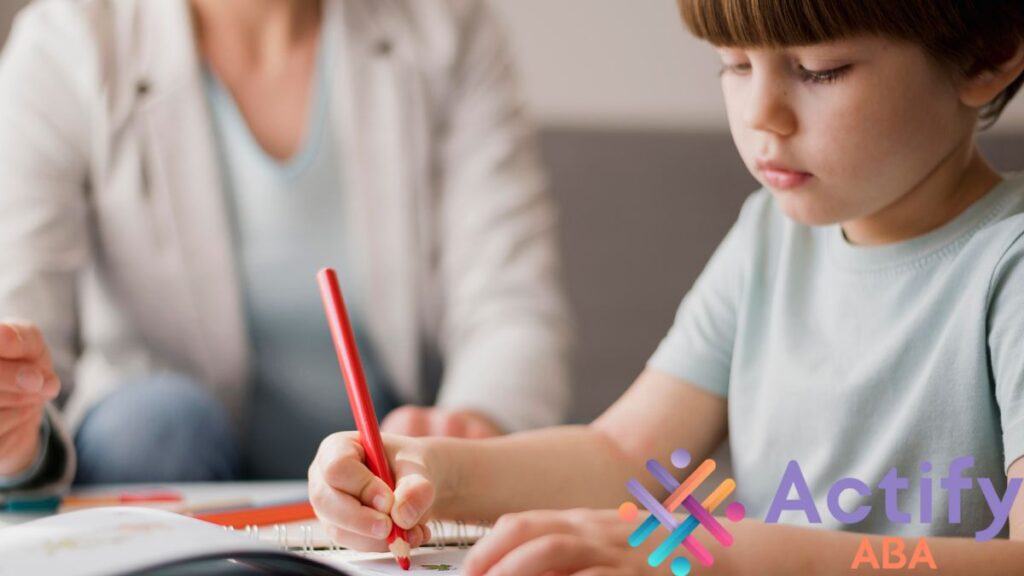
Here is a good example of how this works in practice. Say your child is working on requesting a break when they feel overwhelmed. At home, their RBT teaches them to say “I need a break” or hand over a break card when things feel like too much.
On its own, that skill stays inside four walls. So the team takes it further. During a community outing, maybe a trip to a local park, the same skill gets practiced again. The noise is different. The people are different. The distractions are everywhere. But the expectation stays the same: use the words or the card to ask for a break.
Over time, your child learns the skill is not tied to one room or one person. It travels with them.
| Skill Learned At Home | How It Shows Up In The Community | Why It Matters |
| Requesting a break using words or a card | Asking for a break during a noisy grocery trip | Reduces meltdowns in public settings |
| Following two-step instructions | Following instructions from a coach at a rec center | Builds confidence outside familiar faces |
| Waiting their turn during a game | Waiting in line at an ice cream shop | Supports patience in real social settings |
| Greeting a familiar adult | Greeting a neighbor or a store employee | Strengthens social connection skills |
This is the heart of autism therapy outside the home. It is not about abandoning the comfort of in-home sessions. It is about building on them so your child is not starting from zero every time they step outside.

Community Skills Training Autism: What This Looks Like With Us
Community skills training with our team looks different for every family, because every child has different goals. For some kids, it means practicing check-out lines at a store. For others, it is learning to handle a busy waiting room or ordering at a counter without a script.
Our BCBAs build these outings into your child’s treatment plan once the foundational skills are solid at home. In our experience, this step often marks a turning point for families. Parents tell us they finally see their child using a skill they thought was “only for therapy.”
Why Maryland Families Choose Our Approach
Generalization is not a bonus feature. It is the actual measure of whether therapy is working. A skill that only shows up in one room is not doing much for your child’s daily life.
At Actify ABA, our BCBAs write generalization goals directly into the treatment plan from day one. We do not wait until a skill is “mastered” to think about where else it needs to show up. Community practice gets built in early, alongside your family’s specific routines and priorities. You can read more about our approach on our about page.

How To Get Started With In-Home ABA With Us
Getting started is simpler than most parents expect. Here is what our process looks like:
- Initial Call: Call our intake specialist to learn more about Actify ABA.
- Case Connection: Our Executive Clinical Director matches your family with a dedicated treatment team.
- Development of Treatment Plan: Your BCBA builds a comprehensive, individualized treatment plan for your family.
- Seek Insurance Authorization: We contact your insurance provider on your behalf to request approval for funding.
- Seek Intake Approval: If we are a good fit, we follow up with your insurance provider to begin the ABA therapy process.
- Initial Assessment Process: Your BCBA evaluates your child’s needs to determine how therapy can support your family’s goals.
- Informed Consent: Your BCBA reviews assessment results and the treatment plan with you, then sets a schedule for services.
- Start ABA Therapy: Sessions begin, with generalization built into the plan from the start.
Every step is handled with your family in mind, and our team stays in close contact the entire way.
Frequently Asked Questions
1. What is ABA generalization, and why does it matter?
Generalization means your child can use a skill in more than one setting, not just during a session. It matters because skills that stay in one room are not helping much in daily life.
2. Does community-based therapy replace in-home ABA sessions?
No. It builds on the work done at home. In-home sessions lay the foundation, and community practice helps that foundation hold up outside the house.
3. How soon does community practice start?
This depends on your child’s individual goals and progress. Your BCBA decides when a skill is ready to move into community settings.
4. Is community-based ABA therapy available across Maryland?
Yes. We serve families throughout Maryland, including Ellicott City and surrounding areas.
5. How do I know if my child needs this kind of support?
If your child manages well at home but struggles with the same tasks elsewhere, community practice is likely worth discussing with your BCBA.

Ready To Help Your Child Build Skills That Last?
If you are tired of watching progress stay stuck inside your own four walls, we would like to talk with you. ABA therapy in Ellicott City, MD, with our team means real skills that travel with your child into the grocery store, the classroom, and the playground.
Call us today at 410-929-0988 or email hello@actifyaba.com to take the first step.
You can also visit our blog for more resources or explore careers with our growing team. Your child’s progress should not stop at your front door.
